
USA Pathway: Licensure & Permanent Residency (EB-3 Visa) for Nurses
🇺🇸 USA Pathway: Licensure & Permanent Residency (EB-3 Visa)
The pathway for Internationally Educated Nurses (IENs) to become a Registered Nurse (RN) in the United States is one of the most complex, involving state-specific licensing boards, federal immigration agencies, and often an accredited third-party credentialing service.
The process is generally divided into three major phases: Credentialing, Licensure, and Immigration. It is highly recommended to partner with a U.S. recruitment agency to manage the legal and immigration steps.
Phase 1: Credentialing and Examination
The first phase is focused on verifying your education and proving your competence to practice.
| Step | Action | Key Agency/Requirement |
| 1. Credential Evaluation | Submit your academic transcripts (diploma, BSN, transcript of classes, theory/clinical hours) and home country nursing license for review. | CGFNS International (Commission on Graduates of Foreign Nursing Schools), or an equivalent approved agency (like ERES or Josef Silny), depending on the chosen state. |
| 2. English Proficiency | Take and pass a standardized English language test to prove you can communicate effectively in a U.S. healthcare setting. | IELTS Academic, TOEFL iBT, or OET (Occupational English Test). Typical scores: IELTS Overall 6.5–7.0 / TOEFL iBT 83–90 overall. Nurses from English-speaking countries (UK, Canada, Australia, NZ) are often exempt. |
| 3. Apply to a State Board of Nursing (BON) | Select the state where you plan to work and submit an application for Licensure by Examination. Note: Requirements vary greatly by state (e.g., California may have stricter clinical hour concurrency rules, New York allows IENs to take the NCLEX without a U.S. SSN). | State Board of Nursing (BON). Your chosen BON must approve your application before you can sit for the exam. |
| 4. Pass the NCLEX-RN | Receive the Authorization to Test (ATT) from your state’s BON, register with Pearson VUE, and pass the National Council Licensure Examination (NCLEX-RN). | NCLEX-RN. Passing this exam is the single most critical step that allows your employer to proceed with the Green Card petition. |
| 5. Obtain VisaScreen Certificate | This is the final screening required by the U.S. government (USCIS) for healthcare professionals. It certifies that you meet all education, licensing, and English requirements. | CGFNS VisaScreen Certificate. This bundles your validated credentials and test scores. |
Phase 2: Employment and Immigration (EB-3)
Once you pass the NCLEX, you become highly marketable. The focus shifts entirely to securing permanent residency (Green Card).
| Step | Action | Key Agency/Requirement |
| 6. Secure a Job Offer and Sponsor | A U.S. employer (hospital or recruitment agency) must offer you a permanent, full-time RN position. This employer will serve as your EB-3 sponsor. | U.S. Employer/Staffing Agency. Must be willing and able to file the necessary immigration paperwork. |
| 7. Employer Files Immigrant Petition | The employer files Form I-140, Immigrant Petition for Alien Worker, on your behalf with U.S. Citizenship and Immigration Services (USCIS). Nurses fall under the “Schedule A” designation, bypassing the lengthy Labor Certification (PERM) step. | Form I-140. This officially registers your petition for an immigrant visa. |
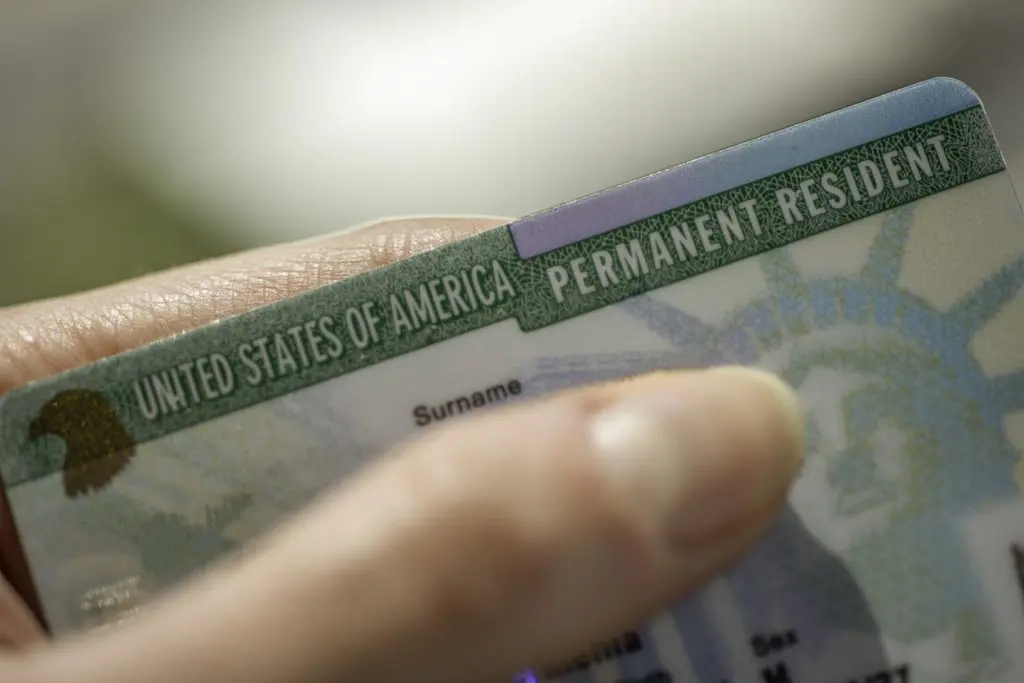
| 8. Visa Interview & Green Card Issuance | Once your priority date becomes current (this can involve a multi-year waiting period depending on your country of origin), you will be instructed to file your final forms (DS-260) and attend an interview at the U.S. Consulate or Embassy in your home country. | EB-3 Immigrant Visa. Upon approval, you receive a visa to enter the U.S. as a Lawful Permanent Resident (LPR). |
Key Reality Checks
- State Variability: The specific order and evaluation agency required (CGFNS, ERES, etc.) depend entirely on the state you choose to apply to. Always check the Board of Nursing website for your target state first.
- The Waiting Game: The EB-3 process (Step 8) is the longest phase. While the application is fast-tracked compared to other visas, the final visa issuance is subject to backlogs based on your country of birth. For example, as of late 2025, nurses born in India and China face significant backlogs in the EB-3 category, while most other countries (including the Philippines) have shorter or current wait times.
- Recruitment Agencies: Most IENs work with a recruitment agency (e.g., Connetics, Interstaff). They pay the legal fees, manage the paperwork, and secure the job, making the complex process manageable.

Comments (0)